%402x.svg)

Audi vehicles combine luxury and engineered performance, but their complexity means certain faults need specialist attention. Knowing the common issues Audi owners face helps you maintain drivability and reliability. This article covers five frequent problems — engine, transmission, electrical, suspension, and diagnostic needs — and explains why early, professional repair preserves performance.
These common faults underline the value of expert repair. Solo Motorsports Milton specialises in diagnosing and repairing these issues so your Audi performs to factory standards and remains dependable.
Audi engines are intricate assemblies that can develop faults requiring specialist diagnosis. Misfires and timing chain problems are frequent and can reduce power and fuel economy. Catching these problems early prevents secondary damage and higher repair costs.
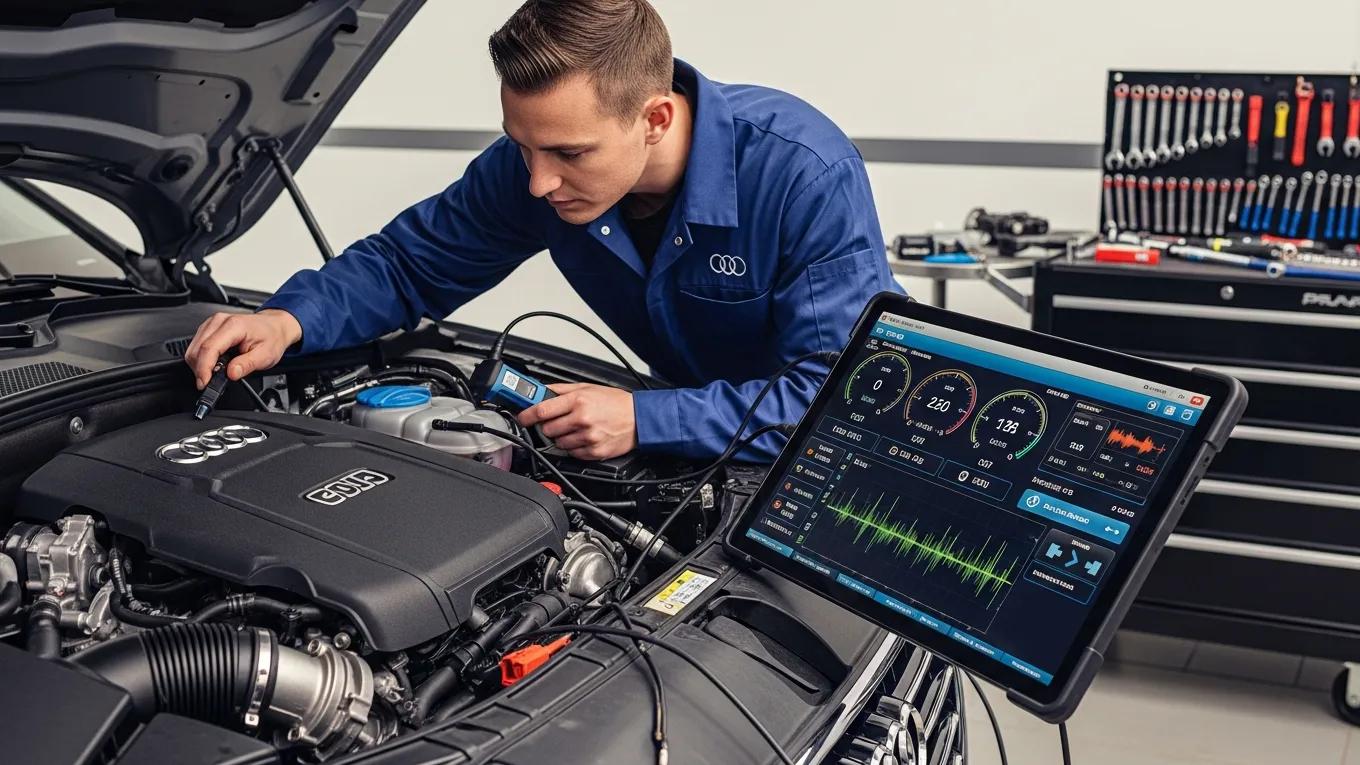
Misfires typically show as rough idle, loss of power or odd engine noises. Technicians use advanced diagnostics to read live data and isolate the root cause. Timing chain issues often produce rattling sounds or trigger warning lights. Rapid diagnosis reduces the risk of severe engine damage.
Automated Diagnosis of Engine Misfire Faults Using Combination Classifiers
ABSTRACT: Existing on-board diagnostic (OBD) vehicle systems can detect the presence of faults, but their diagnostic (fault isolation) capabilities are relatively limited. Enhancements to OBD systems are necessary to provide a high level of automated diagnostic support. In this article, we investigate the issue of internal combustion engine misfires, a category of automotive faults known to be challenging to diagnose. We propose a combination classifier that demonstrates excellent performance in classifying the various root causes of misfire faults. Initially, we acquired real-world data and constructed a database comprising 2,299 instances of actual misfire and misfire-free conditions. Fault data were collected from several distinct vehicle makes and models, with each misfire fault categorized into one of three primary groups (air-intake, coil-ignition, and fuel-injection), further divided into a total of seven subcategories. Subsequently, we developed a combination classifier (referred to as
Automated diagnosis of engine misfire faults using combination classifiers, 2020
Engine repairs often involve replacing worn spark plugs, faulty ignition coils or damaged timing chains. Using genuine or equivalent-spec parts keeps repairs within manufacturer tolerances and restores performance. Regular servicing and prompt repairs extend engine life and reduce unexpected failures.
Transmission faults in Audi cars can quickly degrade drivability. Slipping gears, delayed shifts and unusual noises are common symptoms. These issues usually need specialised service to restore safe, predictable operation.
Spot transmission problems early by watching for hard or delayed shifts, fluid leaks or dashboard warnings. Addressing symptoms promptly limits damage and lowers repair bills. Seek professional assessment at the first sign of trouble.

Maintain transmissions with scheduled fluid changes, regular leak inspections and immediate attention to warning signs. Specialist providers like Solo Motorsports Milton follow Audi service standards to help preserve performance and reliability.
Advanced Electronic Control and Diagnostic System for Automatic Transmissions
ABSTRACT: This paper describes the functions, design, and operational mode of a novel electronic control system tailored for automatic transmissions in city buses. Key features of the control unit include communication capabilities, advanced self-diagnosis, and a modular architecture. Notably, this system introduces a dual-channel computer structure for safety functions, marking its first application in electronic transmission control. Additionally, a new actuator, specifically pressure control solenoid valves, has been developed. Gearshift programs dynamically adapt to driving resistance, thereby reducing fuel consumption while optimizing drivability. The electronic control unit incorporates a transmission simulation model to pre-calculate the control pressure necessary for maintaining a specific target slip time. Adaptive correction of the control pressure compensates for deviations caused by manufacturing tolerances or aging. This automatic adaptation to variable conditions ensures consistently high performance.
An advanced electronic control and diagnostic system for automatic transmission, 1994
Electrical faults can degrade both performance and safety. Common problems include malfunctioning lights, power window failures and infotainment glitches. Proper electrical diagnosis is essential to keep systems reliable and safe.
Electrical faults often present as dimming lights, non-responsive switches or erratic electronic behaviour. These signs point to wiring, module or power-supply faults that need expert testing. Prompt repair prevents secondary issues and improves safety.
Suspension faults reduce ride quality and compromise handling. Watch for excessive bounce, uneven tyre wear or visible fluid leaks. Early attention keeps the chassis and steering responses predictable.
Typical suspension failures include worn shock absorbers, damaged struts and broken springs. If the ride feels unstable or steering is difficult, have a professional inspect the system. Regular checks catch wear before it becomes unsafe.
Professional suspension work restores handling and comfort. Replacing worn parts with quality components returns the vehicle to intended dynamics, improving control and passenger comfort. For Audi owners, that means a safer, more confident drive.
Specialist diagnostic services are vital for complex vehicles. Advanced tools reveal faults that visual checks miss, so technicians can pinpoint the true cause and recommend the correct repair path.
Diagnostic systems read error codes, capture live sensor data and perform subsystem tests to locate faults in the engine, transmission and electrical networks. Early identification through diagnostics allows targeted repairs and prevents escalation.
Customers gain improved reliability and lower long-term costs. Accurate diagnostics reduce unnecessary parts replacement and get vehicles back on the road faster. Trained technicians also provide tailored maintenance advice to keep your Audi performing well.
IssueSymptomsRecommended ActionEngine MisfireRough idling, loss of powerProfessional diagnosis and repairTransmission SlippingDelayed shifting, unusual noisesSpecialized transmission serviceElectrical FaultsDimming lights, non-responsive controlsExpert electrical diagnosticsSuspension ProblemsExcessive bouncing, uneven tire wearProfessional suspension repairInfotainment IssuesGlitches, system failuresSpecialized infotainment diagnostics
This table summarises common Audi faults, their symptoms and the recommended actions to preserve performance and safety. Seek expert service for accurate diagnosis and repair.
Start by checking the relevant fuse. If the fuse is OK, the fault may be the window motor, switch or wiring. A specialist Audi technician can run electrical tests to pinpoint the cause and recommend the correct repair.
Regularly inspect seals around doors, windows and the sunroof and keep drainage channels clear of debris. Have weather stripping checked during routine service. If you spot damp carpets or mould, get professional attention promptly.
Look for slipping gears, delayed or harsh shifting, unusual noises and fluid leaks. Dashboard warning lights can also indicate transmission issues. Early professional assessment helps avoid more extensive damage.
Have the electrical system inspected at least annually or during scheduled maintenance. If you notice dimming lights or malfunctioning features, arrange an inspection sooner. Proactive checks reduce the risk of unexpected failures.
Follow the manufacturer's service schedule: regular oil changes, air filter replacements and spark plug checks. Use recommended fluids and parts, and address unusual noises or performance changes immediately. Scheduled diagnostics also catch issues early.
Yes. Technicians use advanced OBD-II scanners and manufacturer-specific diagnostic software to read fault codes, monitor live data and run system tests. Trained diagnosticians interpret that data to make precise repair recommendations.
Knowing common Audi faults helps you protect performance and safety. Address engine, transmission, electrical and suspension issues quickly with specialist diagnostics and repairs. A proactive, expert approach keeps your Audi reliable and enjoyable to drive.


