%402x.svg)

Owning an Audi means investing in luxury and performance. Ensuring it receives high-quality repairs protects its value and keeps it running as designed. This article offers practical tips to help you choose reliable shops, understand service standards, and recognise the role of certified technicians and OEM parts. Many Audi owners struggle to find service providers that meet factory-level expectations. Follow these tips to keep your vehicle performing and extend its service life. We'll cover selecting a reliable shop, service standards, and the benefits of OEM parts.
Choose a shop that protects your Audi's performance and resale value. Look for technicians experienced with Audi systems and modern diagnostic equipment, and insist on genuine parts to preserve reliability and service life.
For those in the Milton and Alpharetta, GA area, Solo Motorsports Milton specialises in European and German luxury vehicles, including Audi. Their technical focus and emphasis on customer trust make them a strong option for Audi repairs.
Service standards are key to keeping your Audi performing. Regular maintenance prevents problems and helps you choose the right services at the right intervals.
Service TypeFrequencyImportanceOil ChangeEvery 10,000 miles or annuallyEssential for engine healthBrake InspectionEvery 10,000 milesCritical for safetyTire RotationEvery 5,000-7,500 milesPromotes even tire wear
Following these intervals helps your Audi run smoothly and efficiently. Solo Motorsports Milton emphasises these standards to keep vehicles in peak condition.
To keep your Audi at its best, run regular maintenance checks. Key tips include:
These steps help keep your Audi reliable and efficient.
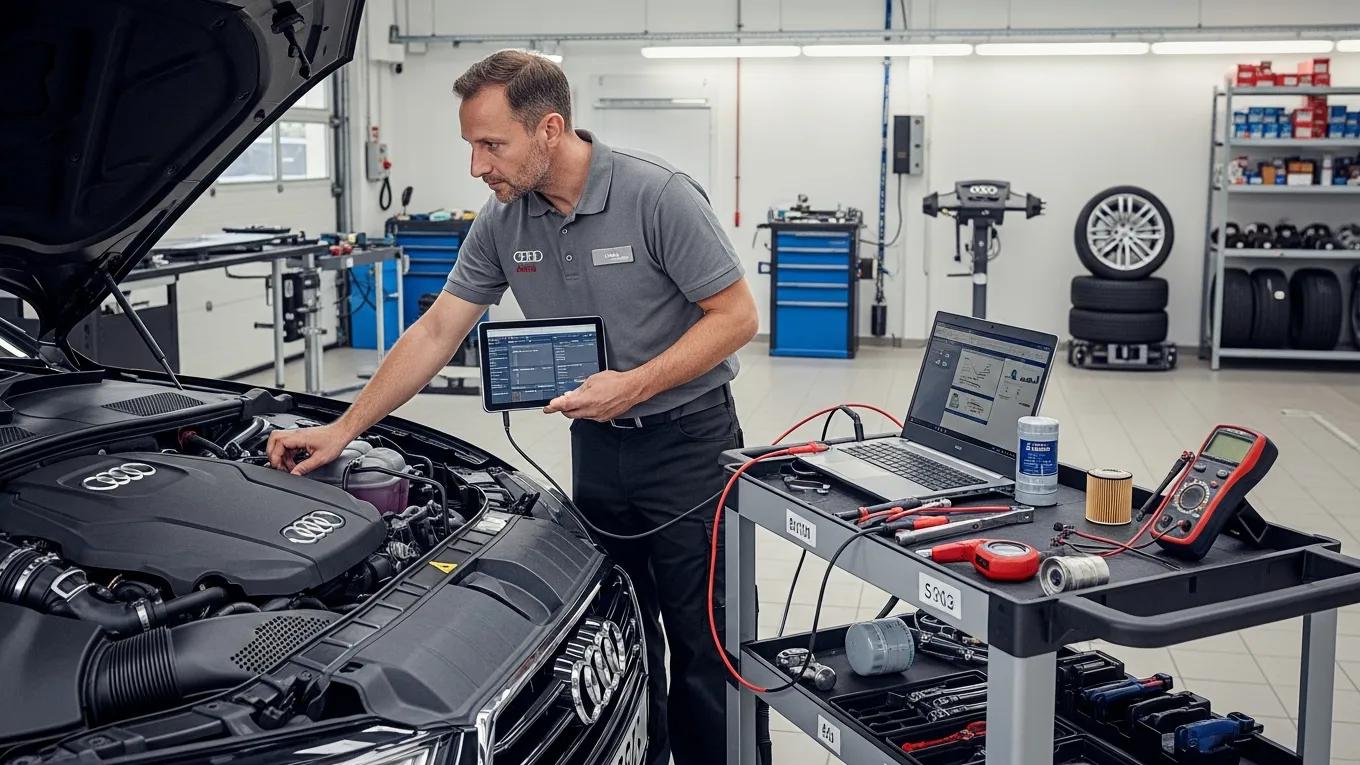
Certified Audi technicians know Audi systems and receive specialised training. Their qualifications, combined with advanced diagnostics, let them identify and resolve faults correctly the first time.
When choosing a shop, verify technician certifications. Key credentials to look for include:
Those certifications indicate your vehicle is in capable hands.
Technicians use advanced diagnostic tools to assess your Audi precisely. These tools allow them to:
That data-driven approach improves repair accuracy and catches problems early, saving you time and money.

Original Equipment Manufacturer (OEM) parts preserve your Audi's performance and warranty. They're designed for your model, deliver the correct fit and factory-level performance, and using non-OEM parts can jeopardize warranty coverage.
OEM parts offer clear advantages over aftermarket options:
Those benefits make OEM parts the preferred choice for Audi repairs.
Using OEM parts protects system integrity and reduces the likelihood of repeat repairs. That reliability can lower long-term ownership costs.
Original Equipment Manufacturer Warranty Administration and Aftermarket Quality Performance
Enhancing product quality and minimizing warranty expenditures are paramount objectives for Original Equipment Manufacturers (OEMs) and their aftermarket sales divisions. For automotive component suppliers, the systematic analysis of warranty claims is a standard operational procedure to identify and remediate product defects. Effective management of warranty costs necessitates robust internal processes, innovative product designs, and proactive defect detection mechanisms. This study investigates the critical contribution of warranty claim analysis to the reduction of warranty costs for automotive component suppliers, particularly within OEM aftermarket sales contexts. Precise analysis of warranty data is essential for pinpointing the root causes of defects and implementing efficacious corrective actions.
Improvement product design quality to reduce warranty cost in aftermarket sales for OEM's customer, NH Abdul Hamid, 2025
That commitment to quality and compatibility can deliver substantial long-term savings.
To secure quality service, check these maintenance and repair standards:
These standards help ensure your Audi gets proper care.
Regular service is vital for optimal performance. Audi recommends these intervals:
Driving conditions and vehicle usage can change these intervals, so consult your technician for personalized recommendations.
When evaluating Audi repair services, consider the following quality indicators:
Use these indicators to judge a shop's reliability and service quality.
To verify the expertise and trustworthiness of an Audi repair shop, consider these steps:
Following these steps will help you find a reputable Audi repair shop.
When evaluating a repair shop, ask the following questions:
Ask these questions to confirm a shop's qualifications and quality commitment.
Customer testimonials and transparent pricing are critical indicators of a repair shop's reliability. Positive feedback from satisfied customers reflects the quality of work and customer service. Additionally, clear pricing structures demonstrate honesty and integrity, ensuring that you know what to expect without hidden fees.
Finding quality Audi service centers in your area can be challenging. Look for centers that offer:
For specialized German and European auto care, Audi owners can rely on Solo Motorsports Milton, a premier service center dedicated to maintaining the performance and integrity of luxury vehicles.
Solo Motorsports Milton is known for Audi expertise. Their technicians deliver high-quality repairs and maintenance. With a focus on customer satisfaction and the use of genuine parts, they ensure your Audi receives proper care.
A shop's location and appointment availability affect your service experience. A conveniently located shop saves time, and flexible scheduling lets you get the vehicle serviced when it suits you. Choosing a shop like Solo Motorsports Milton, which prioritizes customer convenience, can improve the overall experience.
Look for warranties that cover parts and labor for a reasonable period. Confirm OEM parts are included to protect your repair investment. Ask if the warranty is transferable — that can add resale value. A reputable shop will provide clear, written warranty terms and any limitations.
Gather service records and warranty documents before the appointment. Note any issues you've noticed, such as unusual sounds or warning lights. Keep the vehicle accessible and reasonably clean so technicians can inspect it efficiently. Schedule a time when you can discuss the work with the technician.
Watch for dashboard warnings (check engine, oil pressure), unusual noises like grinding or knocking, and handling changes such as pulling or vibrations. These signs warrant prompt attention from a certified technician to prevent further damage.
Keep all receipts and invoices in one folder and request detailed records from your repair shop, including services performed, parts used, and any warranties. Many shops provide digital records; consider using a maintenance app to track dates and reminders so you maintain a complete history.
If you're dissatisfied, raise the issue with the repair shop and provide specific details about what was unsatisfactory. Reputable shops will often offer remedies such as rework or a refund. If the issue remains unresolved, consider escalating to a consumer protection agency or leaving an honest review to inform others.
Older Audis often need more frequent maintenance. Check fluid levels (oil, coolant, brake fluid) for leaks and watch for wear. Inspect the timing belt and water pump, as these components commonly require replacement around 60,000–100,000 miles. Use quality fuel and oil and inspect suspension and brake systems regularly.
High-quality repairs preserve your Audi's performance and value. Choosing certified technicians and OEM parts improves longevity and reliability. Trustworthy shops prioritise customer satisfaction and clear communication to make servicing straightforward. Explore your options to keep your Audi performing at its peak.


