%402x.svg)
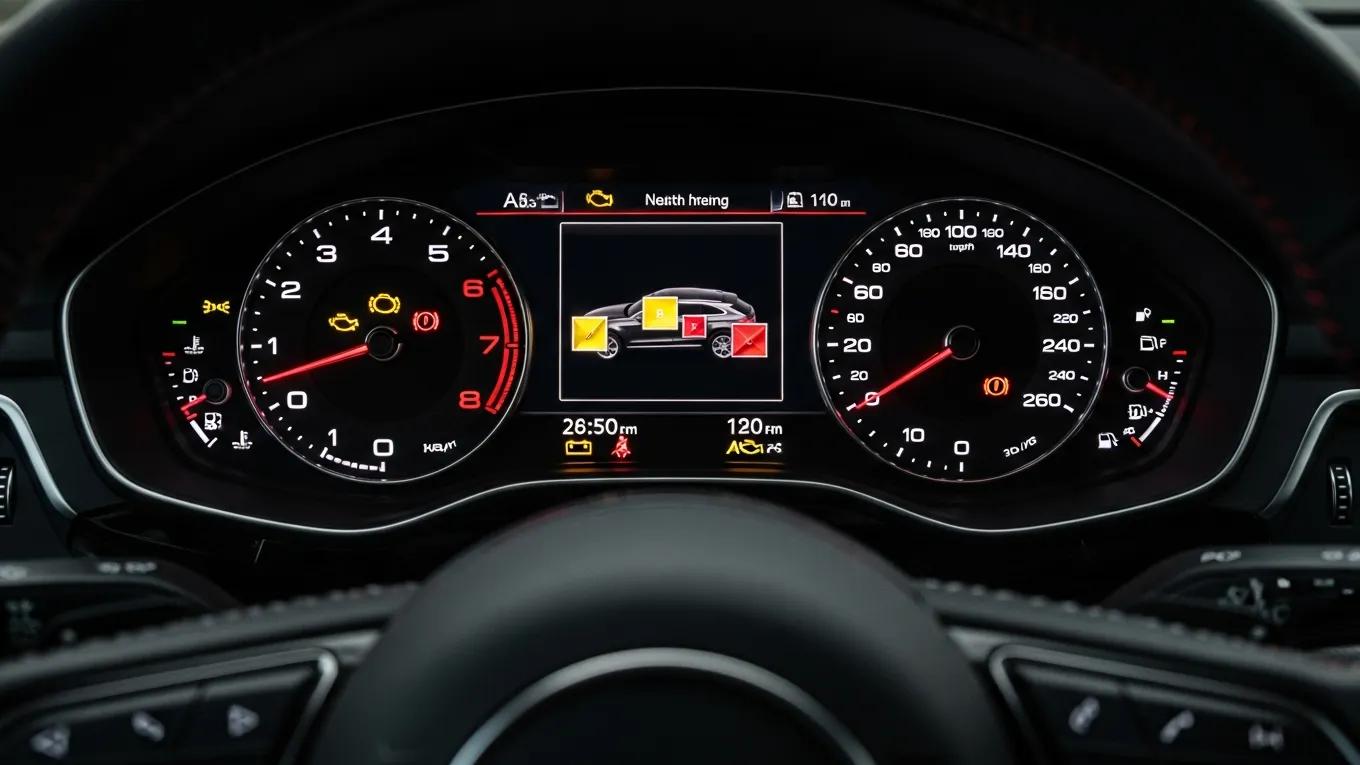
Seeing warning lights or hearing unusual noises from your Audi is a clear signal to act. This guide shows you how to assess the issue, take safe immediate steps, and understand common causes. Follow these procedures to protect performance and safety, and know when a timely professional diagnosis is necessary.
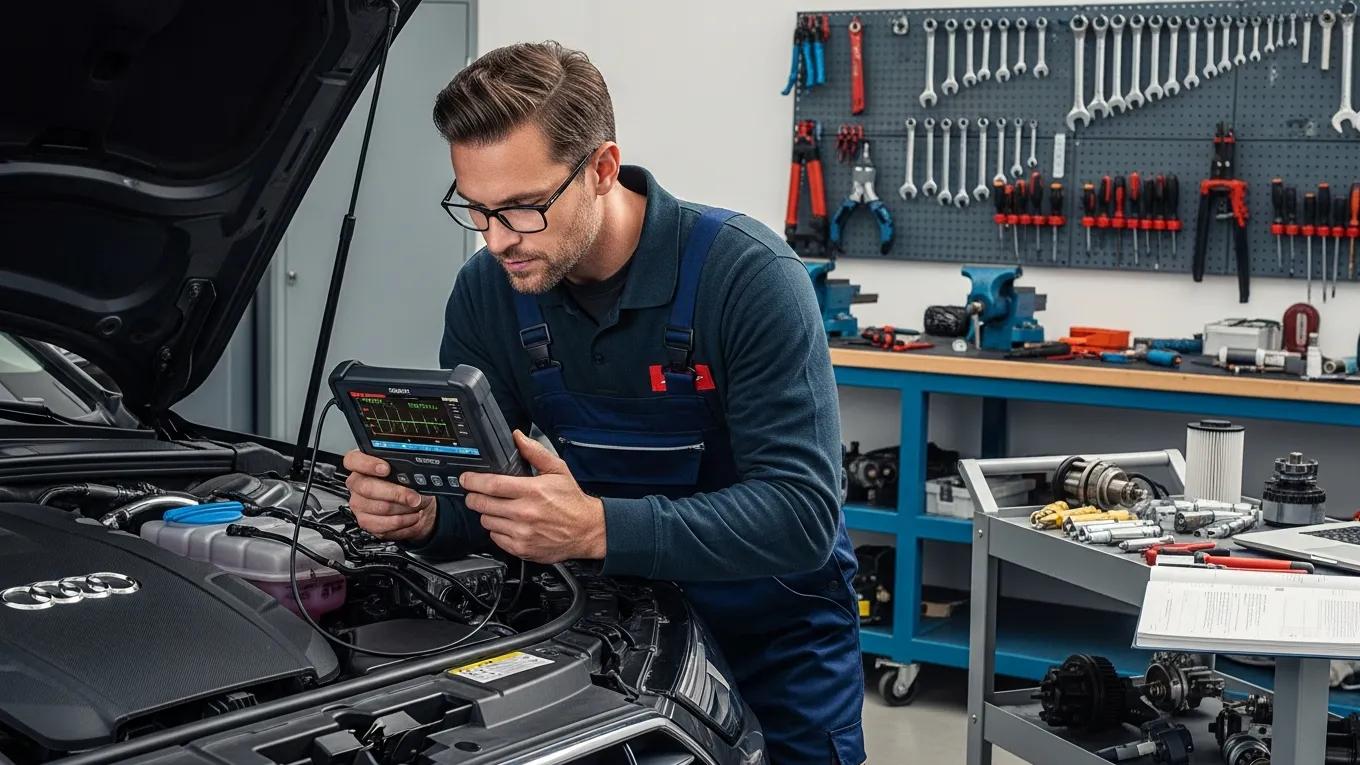
Start with a visual check of the instrument cluster and note which warning lights are on. Each symbol maps to a specific system, so identifying the exact icon narrows the fault area. Use an OBD-II scanner to read stored fault codes and live data for engine, transmission, and emission systems. Record when the lights or sounds occur — engine load, speed, temperature — to give technicians precise reproduction steps.
Driver understanding of indicator symbols affects how quickly they respond and whether they follow recommended maintenance actions.
Vehicle Dashboard Indicator Light Comprehension and Maintenance
Dashboard indicator light symbols convey information regarding vehicle status and functionality; however, the actions taken to address issues associated with these symbols are contingent upon drivers' familiarity with and comprehension of the symbols, as well as demographic factors. Consequently, this study evaluates drivers' familiarity and comprehension of dashboard indicator light symbols and further investigates the influence of driver background factors and symbol comprehension levels on drivers' adherence to preventive maintenance.
Comprehensibility and impact of vehicle dashboard indicator light symbols on drivers' preventive maintenance compliance, C Atombo, 2025
Act quickly to limit damage and keep yourself safe. The steps below prioritise vehicle protection and personal safety.
Those actions reduce immediate risk and give you time to collect information for the next diagnostic steps.
Warning lights and strange noises can come from several areas. Typical causes include:
Unusual engine noises often point to specific component faults. Common examples include:
Use targeted diagnostic steps to pinpoint the source of noises:
Acoustic analysis is an established diagnostic technique; experienced technicians can often localise faults by sound before disassembly.
Engine Fault Diagnosis Using Noise Analysis
Internal Combustion Engines (ICEs) exhibit distinct acoustic signatures. These acoustic characteristics enable skilled automotive technicians to diagnose specific engine malfunctions solely by auditory assessment. This methodology mitigates the necessity for component disassembly to identify machine faults, thereby substantially reducing overall repair duration. The primary objective of this study is to establish a methodology for identifying machine malfunctions at an early stage through the analysis of engine noise, augmented by visual data.
Diagnostic on car internal combustion engine through noise, B Rahman, 2023
Some signs mean you should book professional help immediately. Look out for flashing warning lights, multiple simultaneous alerts, or faults that persist after basic checks. These often indicate a systemic issue or a safety-critical fault.
For expert diagnostics and repairs, consider reaching out to Solo Motorsports Milton, a specialized automotive service provider focusing on European luxury vehicles, including Audi.
Promptly addressing warning lights and unusual sounds protects your Audi’s longevity and performance. Regular inspections with qualified technicians will help catch issues early and maintain vehicle reliability and safety on the road.
Audi warning lights are system-specific alerts that point to faults in engine, transmission, braking, charging, tyres, and driver-assistance systems. Identifying the exact symbol tells you which system needs attention and guides the correct response.
As vehicle systems and ADAS become more sophisticated, dashboard symbols and their required responses have grown more complex.
Driver Comprehension of Automotive Warning Symbols and Associated Actions
This study aimed to assess drivers' understanding of automotive symbol meanings and the appropriate actions to be taken in response to these symbols. Given the significant advancements in vehicle technology, the proliferation of diverse powertrain options, and the evolution of advanced driver-assistance systems (ADAS), instrument cluster interfaces have grown increasingly complex. This complexity places greater cognitive demands on drivers. Therefore, comprehending the needs and preferences of a varied driver population is crucial for developing digital instrument cluster interfaces that enhance drivers' grasp of critical vehicle information.
Evaluating Drivers' Understanding of Automotive Symbols Related to Powertrain and Advanced Driver Assistant Systems, 2020
Certain lights need immediate attention. Examples include the oil pressure warning (risk of engine damage), battery/charging warning (possible charging-system failure), and brake warning (potential brake-system fault that affects safety).
Learn the most frequent symbols so you can act quickly. Key examples are the check engine light for engine or emission faults, the tyre pressure warning for low tyre pressure, and the ABS light for anti-lock brake system issues.
Diagnosing engine noises means matching sound characteristics to likely faults and verifying with inspections and diagnostic tools. Note when the noise appears and under what conditions to help isolate the source.
Noises often trace to loose parts, worn bearings, or exhaust leaks. Each sound—rattle, grind, hiss—points to different components that require targeted inspection.
Effective diagnosis includes listening for patterns (idle vs. load), performing a visual inspection for wear or leaks, and consulting a professional when in doubt to combine acoustic clues with diagnostic data.
Resetting minor warning lights can be done safely if you follow proper steps and confirm the fault is resolved. Use resets only after verifying no active fault remains.
These steps may clear transient alerts, but recurring warnings require a diagnostic scan and professional repair.
Choosing the right provider matters. Solo Motorsports Milton focuses on European luxury vehicles and applies Audi-specific diagnostic procedures to ensure accurate fault identification and repairs.
We use Audi-capable diagnostic interfaces and OEM-level scan tools to read manufacturer codes and live parameters. Our technicians train on current diagnostic methods so repairs target the root cause efficiently.
We tailor diagnostics and repair plans to each vehicle. That means we document symptoms, test systems under the conditions the fault appears, and communicate findings and recommended repairs clearly to you.

Booking service is simple: contact Solo Motorsports Milton to discuss symptoms and arrange an appointment that fits your schedule.
Expect a structured inspection: code reading with OEM-capable tools, physical checks of impacted systems, and a clear write-up of findings with repair recommendations and cost estimates.
Preparation helps speed the process. Note symptom details, remove personal items, and schedule a time that works for you to allow a thorough inspection.
Those steps let technicians focus on diagnosis and get your Audi back on the road sooner.
Stay calm and find a safe place to stop. Turn off the engine once parked to limit damage. Check for visible signs like leaks or smoke. If lights remain after a restart, consult your owner’s manual and get professional diagnostics to identify fault codes and corrective action.
Follow the manufacturer’s service schedule: routine oil changes, fluid checks, and tyre rotations. Respond to unusual noises or performance changes early. Regular inspections and prompt minor repairs reduce the chance of warning lights activating.
Yes. An OBD-II scanner will read stored fault codes and live data to highlight affected systems. You can also perform a visual check for leaks or damaged components. For complex faults or intermittent issues, professional diagnostic equipment and technician experience are recommended.
Ignoring warnings can cause serious damage and safety risks. For example, low oil pressure can lead to catastrophic engine damage. Unaddressed faults may escalate repair costs and increase the chance of break-down or accident.
Have your Audi inspected at least annually and whenever a warning light appears. If you notice unusual sounds or performance changes, schedule an inspection immediately to prevent minor issues from becoming major repairs.
You can clear some lights using basic resets, such as cycling ignition or disconnecting the battery briefly, but that only erases the symptom. If the fault persists the light will return. Prioritise diagnosing the underlying cause rather than just resetting indicators.
Responding quickly to warning lights and unusual sounds preserves your Audi’s performance and prevents larger repairs. Regular inspections and professional diagnostics catch faults early. For specialist diagnosis and repair, consider contacting Solo Motorsports Milton.


